--------------------------- ---------------------------
- Clothing -
Stretching, draping and folding the cloth just right can make your
drawing a hundred times better looking. It adds realism and depth to
the character's appearance. Luckily there are only so many ways to
stretch, fold and drape a piece of clothing on the human form. Your set
once you know the basic fold patterns of a regular shirt and pants. That
being said, clothing effects in manga don't always have to reflect
reality. Put more in, put less in, but just do what looks right.
There are two ways to draw clothes:
First - Draw the clothes as
you draw the character. No extra pencil marks confusing you later on
when its time to ink. As your skill goes up, this way becomes the
easier path to take.
Second - First draw the entire body, and then draw the clothes over top. Good practice for a beginner, but I don't really recommend it. It can get confusing, and you might lose your line in all the extra penciling. Or it might lead to an unerasable smear of pencil lead. Man, you never get those out of the paper!
Shirts -
Shirt on a male form -
The biggest concern with drawing a shirt on the male form is the sleeves, and only when the arms are in motion.
Don't crowd the cloth with too many stretch lines. Just a tad here, a bit there. Maybe it gets caught up on his belt, maybe not. This is the time to let your imagination really run wild. Of course, the imagination doesn't take breaks.


Clothing on a female form -


Arm straight up -
When the arm reaches straight up the fabric's pull lines run almost vertical. And sleeve basically goes limp and buckles on top of the shoulder muscle.

Arm raised Halfway -
The sleeve will contract in length as it buckles. The top of the arm pulls it, so the stretches will only run downwards.

Pants -
When it comes to pants, the only folds you really have to deal with are in the crotch and knee. After you get that down you don't really have anything to worry about. Sometimes there is some folding around the feet, but thats easy enough to deal with.

Pleats -
There are only two kinds of pleats I know of. (A third super secret one???) Both are fairly basic and easy to use. You can only really use them for skirts, kilts, and curtains. But they sure are pretty.
Remember to draw the back side of the folded part if its showing. I say this because I forget sometimes, or just don't pay attention.

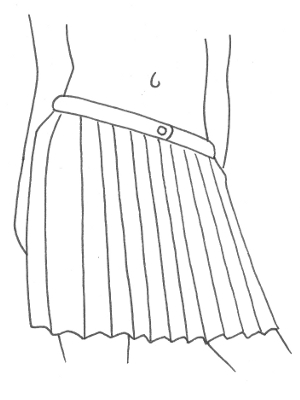
Drawing a Skirt -
Remember when drawing a pleated skirt that there is a lot of extra fabric hidden in the folds. This makes it flow and mold to the movement of the legs. This also makes it a bit more stable, and heavier than it looks. So wind will have less effect on it.